Students of UX

For my UXD bachelor graduation project, I designed the digital platform and identity for Students of UX, an international student association uniting UXD students at The Hague University of Applied Sciences.
Project Overview
For my User Experience Design (UXD) bachelor graduation project, I designed the digital platform and identity for Students of UX, an international student association aimed at uniting UXD students at The Hague University of Applied Sciences. The project combined every phase of the Design Thinking process (research, define, ideate, prototype, and test) to create an inclusive online hub where students could connect, share experiences, and access helpful information about studying and living in the Netherlands.

Design Thinking process framework by: Nielsen Norman Group
The Challenge
International students at The Hague University often face challenges such as loneliness, lack of onboarding support, and difficulty finding practical information. Existing associations and resources primarily catered to Dutch-speaking students, leaving internationals underserved. The goal was to design an online platform that:
- Strengthened the international UXD community.
- Offered centralized access to academic and social information.
- Encouraged collaboration and participation without hierarchy or obligations.
Research & Discovery
To deeply understand the target group, I used a wide mix of qualitative and quantitative methods:
- Desktop research: Examined international student experiences and pain points.
- Questionnaire (n=38): Gathered insights on social habits, challenges, and preferred activities.
- Interviews (5 nationalities): Explored cultural adaptation, inclusivity, and onboarding struggles.
- Observations: Attended social gatherings to understand student dynamics.
- Benchmarking: Compared existing student association websites.
- Crowdsourcing & Surveys: Used social media polls to gather opinions on logo design, color, and visual identity.
Key Insights
- Students wanted a safe, inclusive space free from hierarchy.
- Information about studying and living in the Netherlands was scattered and inconsistent.
- Many students felt lonely or unmotivated to engage socially without external triggers.
- Consistency, inclusivity, and fun were key to participation.

Design vision
Define
To synthesize research insights, I created an empathy map summarizing goals, emotions, pains, and gains from the target group. This map was constructed using quotes from interviews, survey responses, and observation interactions providing a clear summary of the most important aspects to empathize with international students.

I created three personas representing distinct international student archetypes. Each persona embodies different struggles and desires while sharing the common experience of being an international UXD student.
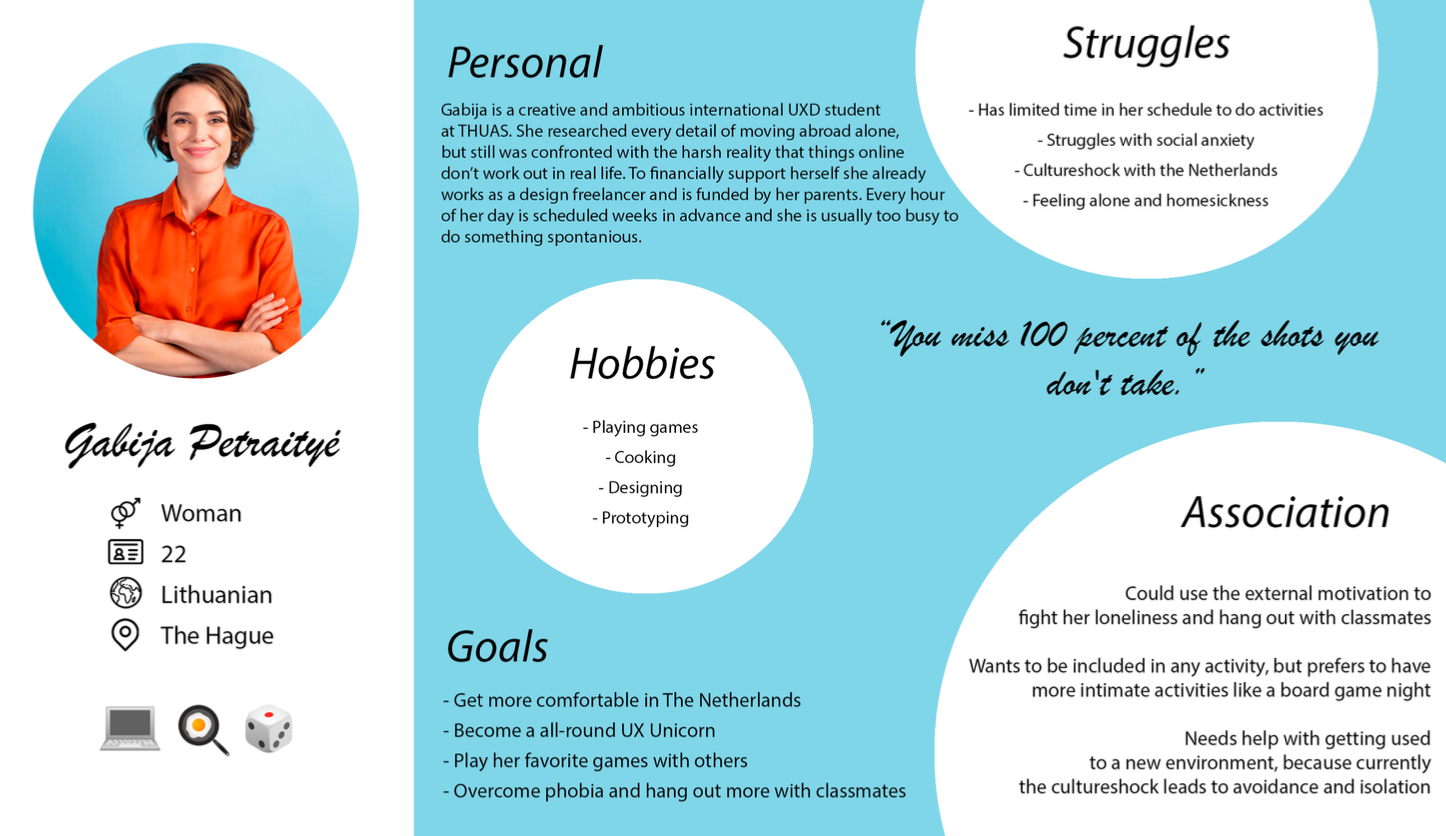
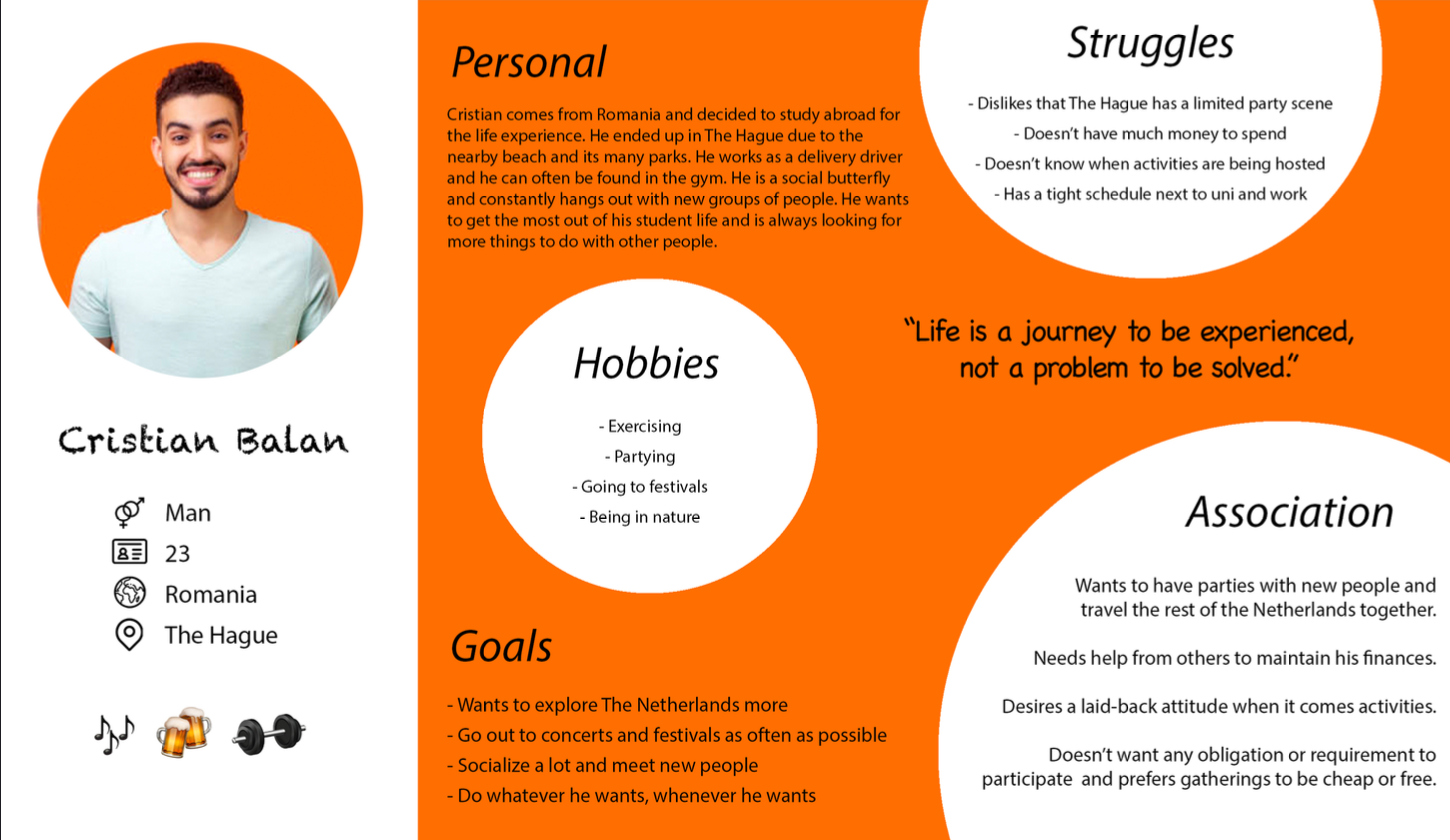
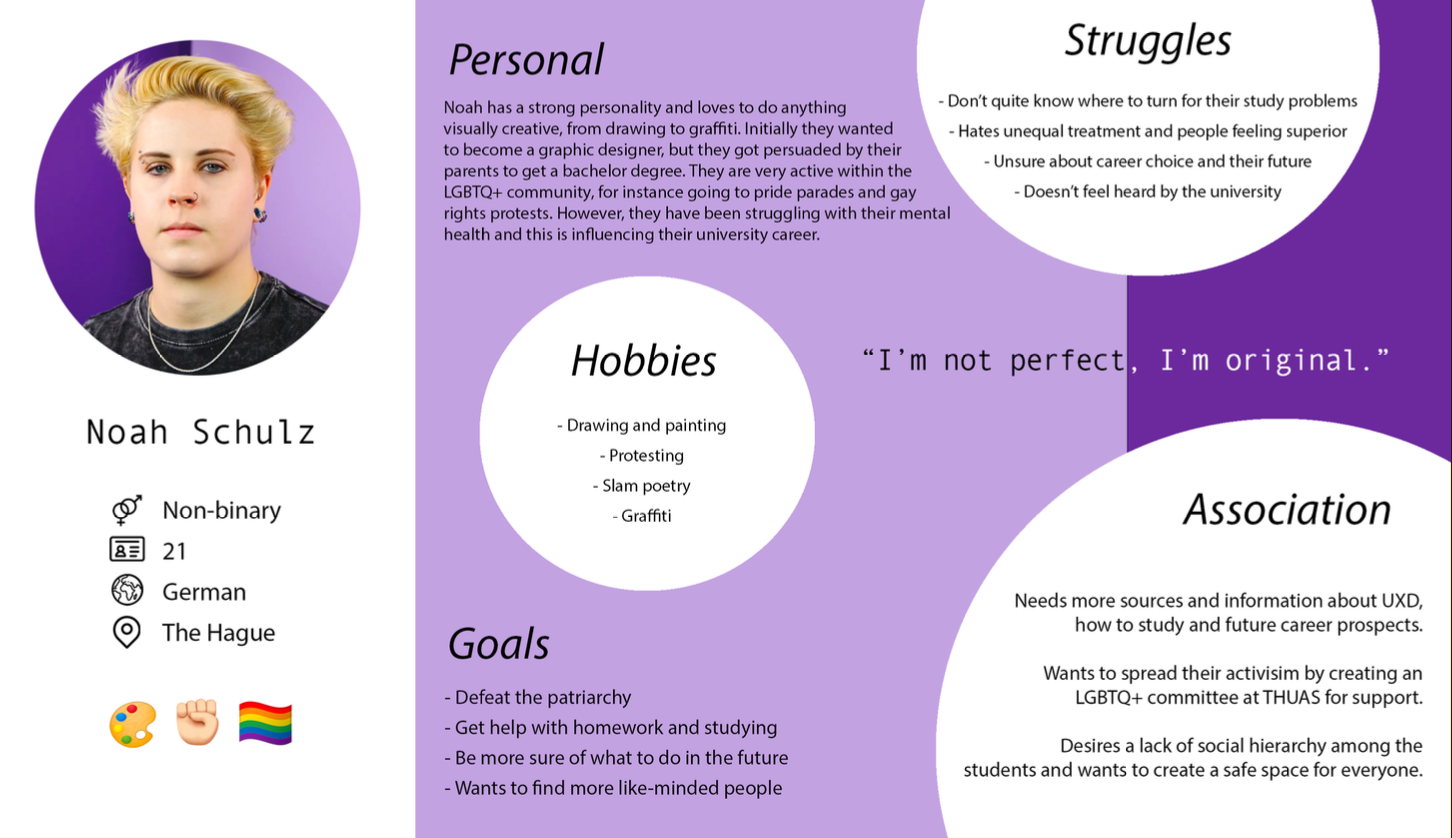
Using these personas, I identified 36 user needs (12 per persona) by translating research insights into specific requirements. For example, the interview statement "Actions speak more than words, show the students they can participate" became the need "I need to be able to see what past activities were like." I prioritized these needs using the Moscow method (Must have, Should have, Could have, Won't have).


Ideation
I hosted ideation workshops with international UXD students using creative techniques such as:
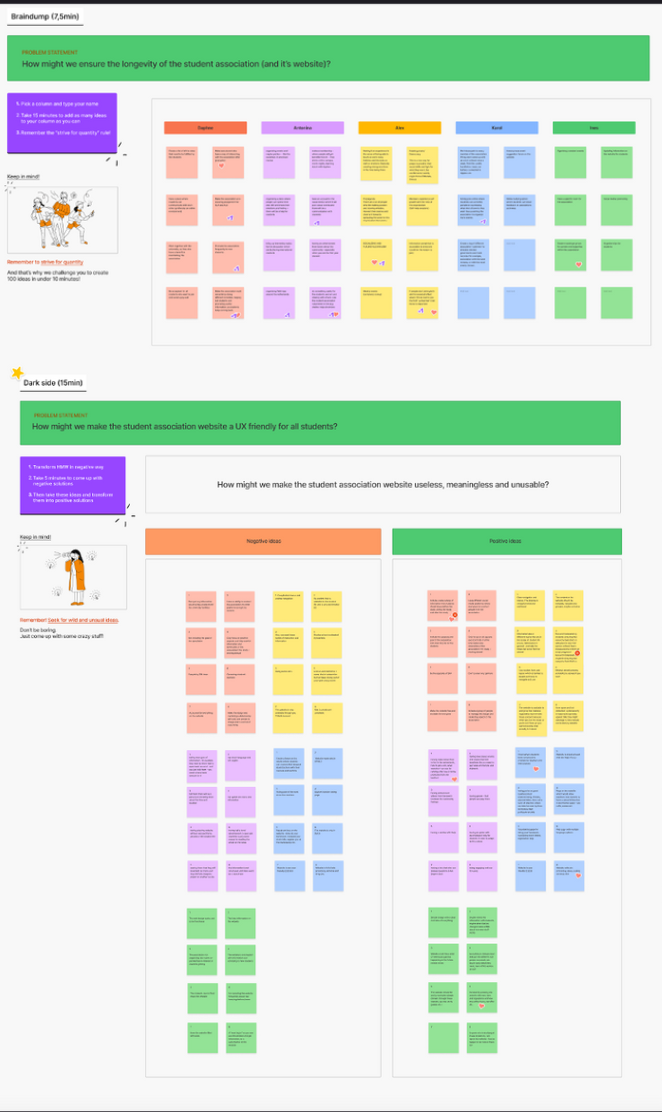
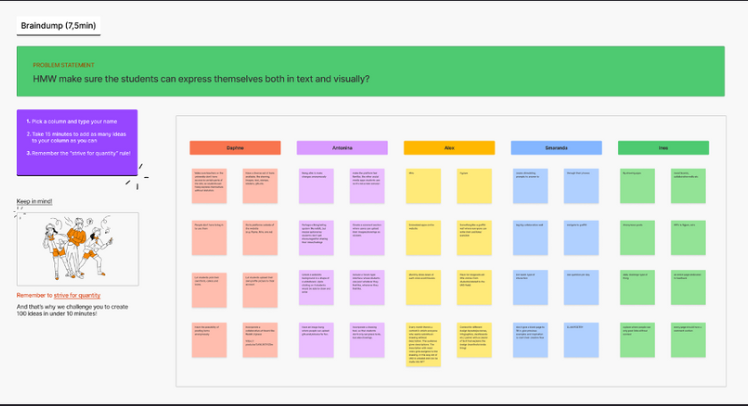
- Brain dump (rapid idea generation).
- Dark side (identifying what not to do).
- Brainwriting (building on each other's ideas).
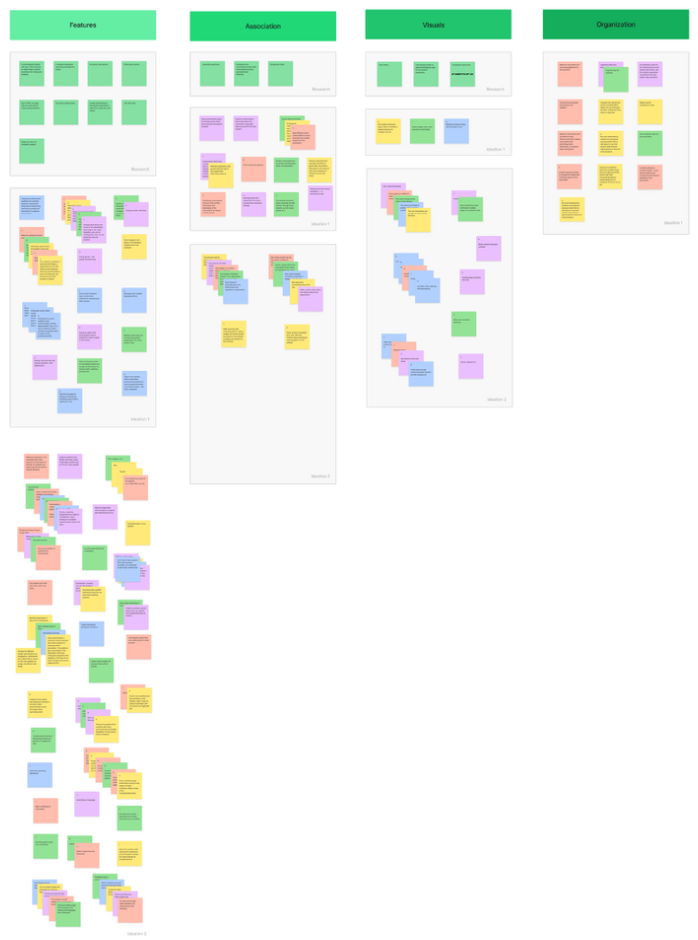
- Affinity mapping (clustering ideas).
- Evaluation matrix (scoring ideas on UX criteria).
From these sessions, I developed six concept categories: Activities, Education, Expression, Feedback, Guidance, and Students of UX (committees). Each concept directly addressed the research-based "How Might We" questions, such as:
- "How might we ensure the longevity of the student association?"
- "How might we make the website UX-friendly for all students?"
- "How might we get people to participate?"
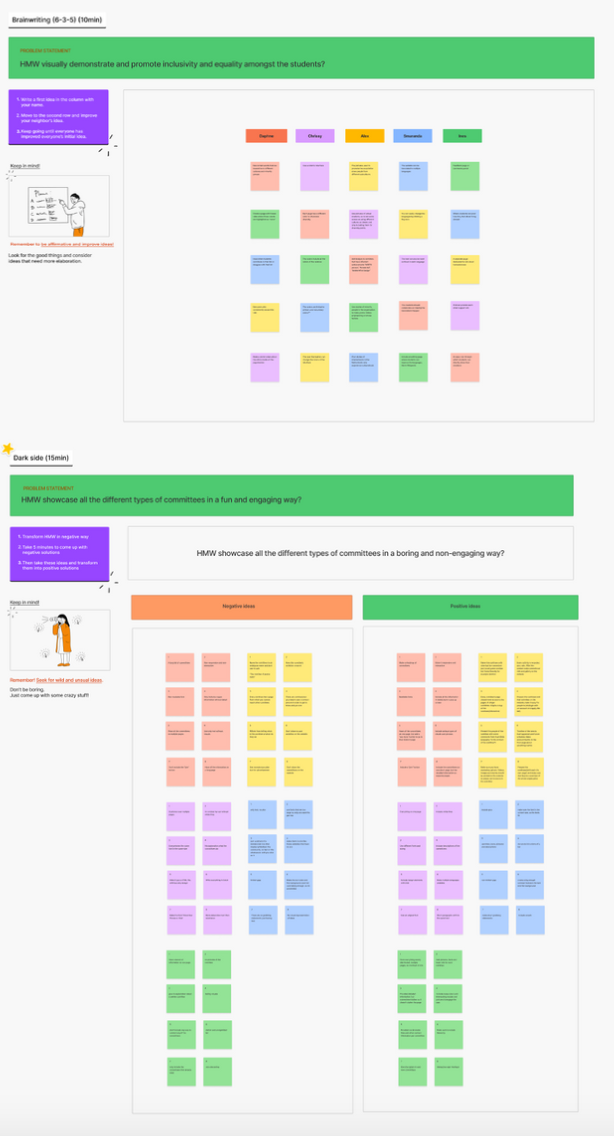
Brain dump and dark side ideation results.
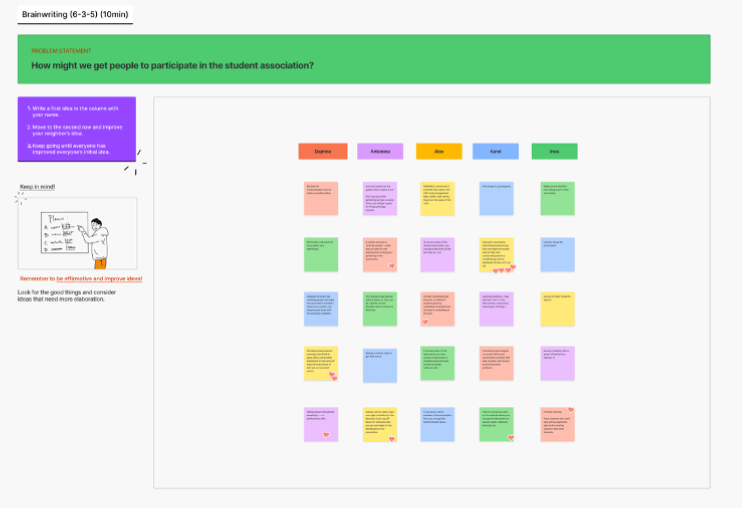
Brainwriting outcomes clustered into early concept directions.
Affinity mapping to group ideas into themes.
Evaluation matrix to prioritize concepts on UX criteria.
Shortlisted concepts mapped to participation motivators.
Design
From the prioritized ideas, I created six concept categories for showcasing features on the website. Each concept was designed to address specific "How Might We" questions from the ideation sessions, focusing on meaningful, useful, usable, and engaging experiences.
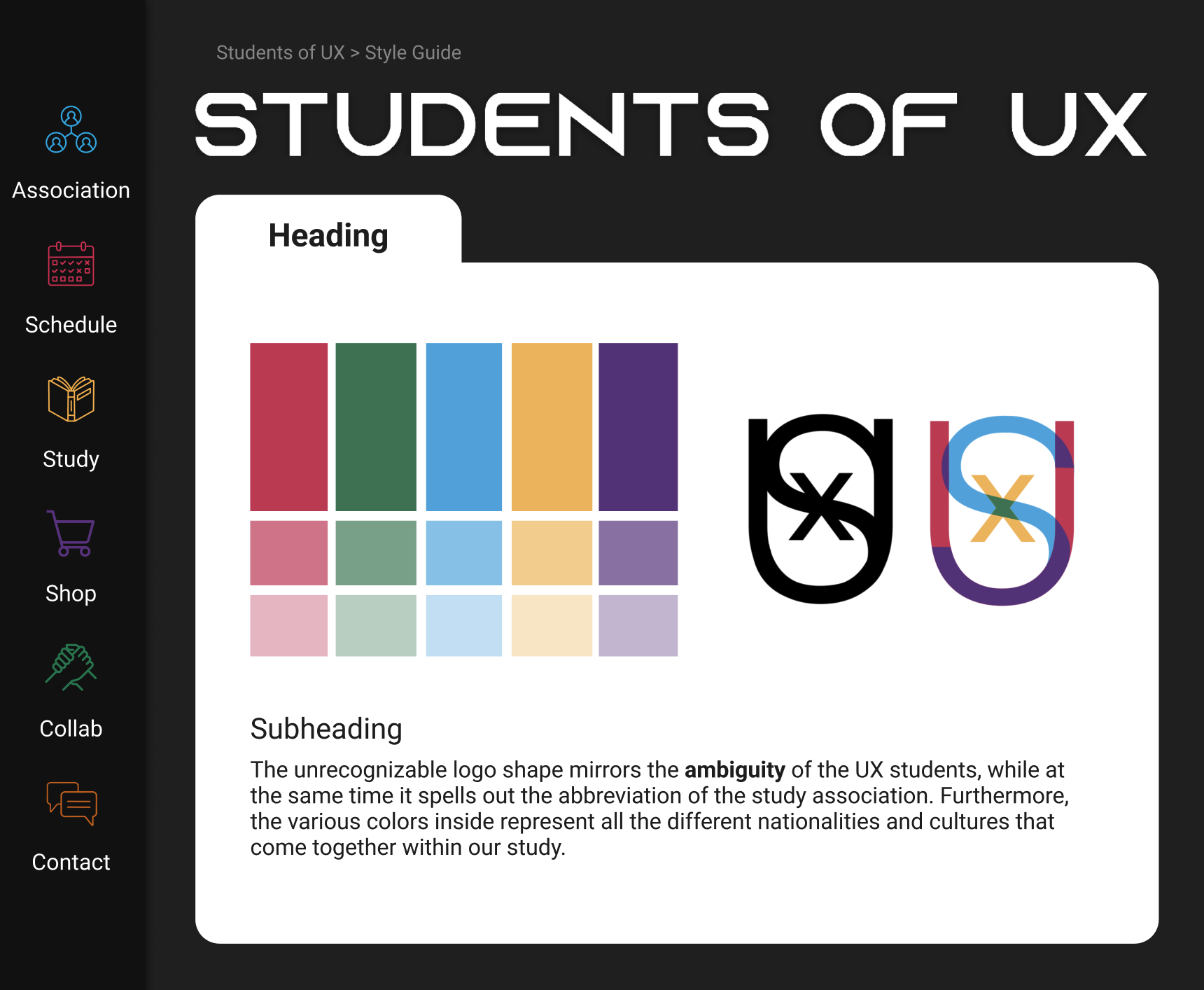
Style tile and design system


The style tile establishes the visual foundation with a cohesive color palette, typography, and iconography system that reflects the inclusive and professional nature of the student association. The six concept designs showcase key features including activity management, educational resources, student expression tools, feedback collection, guidance systems, and committee organization. Each concept addresses specific user needs identified during research while maintaining visual consistency through the established design system, creating a unified platform that serves both organizational and community-building purposes.
Wireframe
I then designed both desktop and mobile wireframes in Figma, focusing on clear navigation, accessibility, and recognizable UXD elements (breadcrumbs, sequence maps, dark theme).
Test
I conducted three testing sessions with international UXD students from different European countries. These participants represented the target demographic perfectly with their diverse backgrounds and varying ages, helping me improve the website based on different needs.
The most notable changes from testing included:
- Menu adaptations - separating merchandise/shop from collaboration tools and moving search to the main menu
- Creating a separate search results page instead of immediate redirects
- Dividing content into multiple pages to reduce scrolling
- Adding calendar sync options and exam weeks/deadlines to schedules
- Changing phrases to be more proactive ("Join us!" instead of "How to join")
- Increasing font size from 12pt to 14pt for better accessibility
- Making the committee mindmap interactive on hover
- Adding archive sections and clearer calls-to-action throughout
Participants appreciated the navigation clarity, scheduling features, and community-focused approach. They emphasized the website's potential to reduce stress and anxiety by providing centralized, student-friendly information and facilitating connections between international students.
Prototype (Solution)
Besides incorporating testing feedback, I made additional changes to create the final prototype, including roles of main association members, "apply now" and "join now" buttons, and multiple activity pages to complete the sense of realism. The prototype successfully addresses all "How Might We" questions by providing a hub for students to connect, ensuring longevity through user-contributed content, and promoting inclusivity through accessible design.
Key features implemented include recognizable UX elements (sequence maps, breadcrumbs), sparing use of colors with white space, readable fonts, and comprehensive information covering all phases of student life. The website serves as both an organizational tool and a community platform, helping international students navigate university life while building meaningful connections.
Impact
- Academic success: Earned top marks for integrating the full Design Thinking process.
- Community impact: Helped spark discussions about launching a real international student association.
- Personal impact: Strengthened my ability to lead multidisciplinary projects and facilitate participatory design sessions.
Key Learnings
- Conducting full-cycle design research provided a deep understanding of how UX can drive community building.
- Designing for diverse users taught me how to balance usability, inclusivity, and identity.
- Managing the entire process independently enhanced my autonomy, leadership, and communication skills and served as the foundation for my freelance work.
This project represents the culmination of my UXD bachelor’s education, merging research, empathy, and design execution into one comprehensive solution for a real problem faced by international students.